Have you ever typed “miniscule” and felt unsure? You’re not alone this is one of the most commonly confused spellings in English. The tricky part is that both versions look believable, but only one is officially correct.
In this guide, we’ll break down minuscule vs miniscule, explain the right spelling, give examples, highlight common mistakes, and help you remember it easily.
Quick Answer
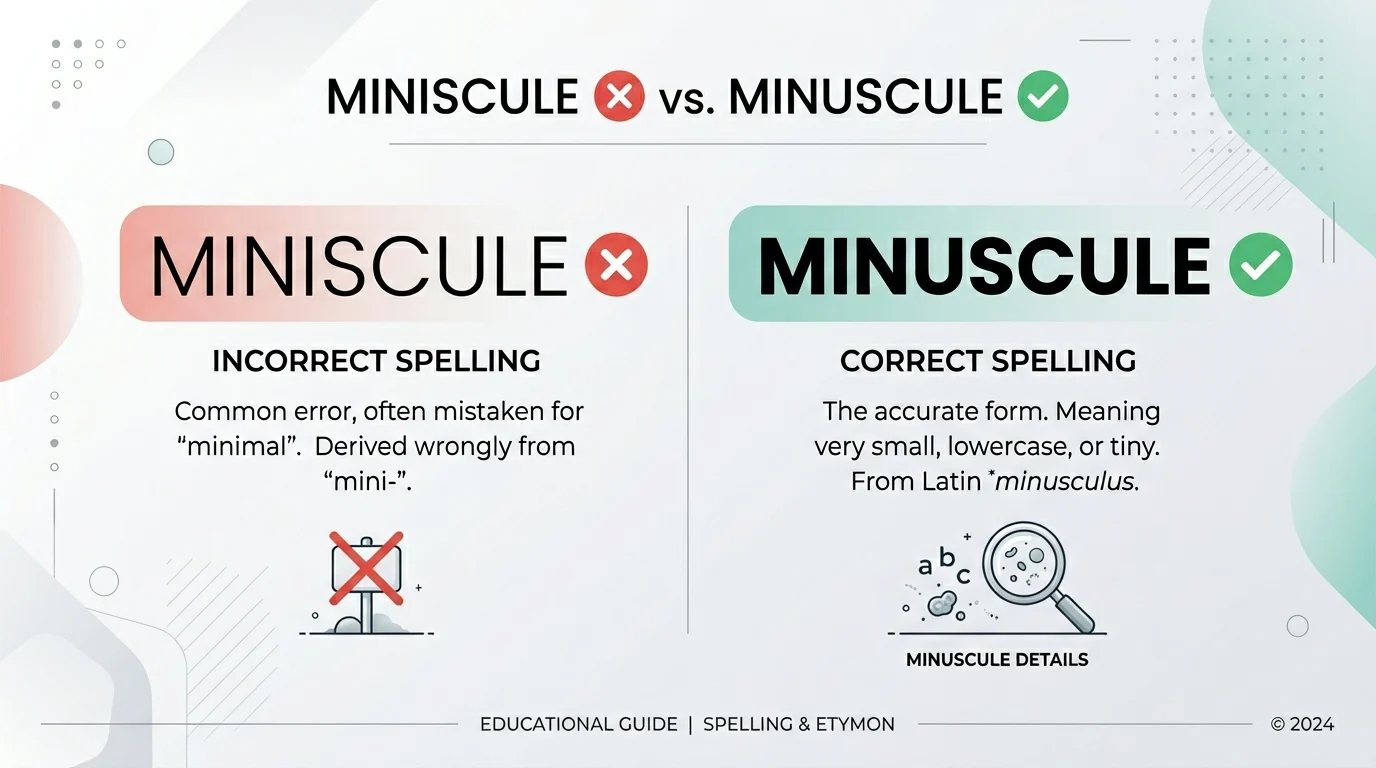
- ✅ Minuscule is the correct spelling
- ❌ Miniscule is incorrect (though commonly used by mistake)
Always use minuscule in standard English writing.
What Does “Minuscule” Mean?
Minuscule is an adjective that means extremely small or tiny.
Common meanings:
- Very small in size
- Insignificant or मामूली (minor in importance)
- Barely noticeable
Example sentences:
- The chances of success are minuscule.
- He noticed a minuscule crack in the wall.
- The difference between the two options is minuscule.
Why “Miniscule” Is Incorrect
The spelling “miniscule” is a very common error—but it’s not standard.
Why the confusion happens:
- People assume the word comes from “mini” (meaning small)
- So they mistakenly spell it as mini + scule = miniscule ❌
The truth:
- The word comes from Latin “minus” (meaning smaller)
- So the correct spelling is minuscule ✅
Minuscule vs Miniscule: Key Differences
| Feature | Minuscule | Miniscule |
|---|---|---|
| Correct | ✔ Yes | ✖ No |
| Origin | From Latin “minus” | Misinterpretation of “mini” |
| Usage | Standard English | Common misspelling |
| Recommended | Always use | Avoid completely |
Common Mistakes to Avoid
1. Thinking it comes from “mini”
- ❌ A miniscule amount
- ✔ A minuscule amount
2. Relying on how it sounds
Both spellings sound similar, which leads to confusion.
3. Using the wrong spelling in formal writing
“Miniscule” may be understood but can hurt credibility.
Helpful Tip to Remember
Think of it like this:
👉 Minuscule = “minus” (smaller) → correct spelling
👉 Not “mini” → so avoid miniscule
More Examples of “Minuscule” in Context
- There is only a minuscule chance of rain today.
- The error was minuscule and easy to fix.
- He made a minuscule improvement in performance.
- The insect was so minuscule it was hard to see.
Synonyms and Related Words
To enhance your writing, you can also use:
- Tiny
- Minute
- Microscopic
- Insignificant
- Trivial
These help vary your vocabulary while keeping your meaning clear.
American vs British English
There’s no difference here:
- Minuscule is correct in both American and British English
- Miniscule is considered incorrect in both
FAQs About Minuscule vs Miniscule
1. Is “miniscule” ever correct?
No, miniscule is not considered correct in standard English.
2. Why do people spell it “miniscule”?
Because they mistakenly associate it with the word “mini.”
3. What does “minuscule” mean?
It means extremely small or insignificant.
4. Is “minuscule” used in formal writing?
Yes, it is widely used in academic, professional, and everyday writing.
5. How do you pronounce “minuscule”?
It’s pronounced like: MIN-uh-skyool.
6. What is the origin of “minuscule”?
It comes from Latin “minus,” meaning smaller.
7. Can “minuscule” describe importance?
Yes, it can refer to something very small in significance or impact.
Summary
When comparing minuscule vs miniscule, the correct spelling is always minuscule. It comes from the Latin word “minus,” meaning smaller, and is the standard form used in all types of writing. The version miniscule is a common mistake caused by confusion with the word “mini.”
Using the correct spelling helps your writing look polished and professional. Once you remember the origin, this tricky word becomes much easier to get right.
Actionable Takeaway
Next time you write the word, remember:
👉 Minuscule = from “minus” (correct)
👉 Miniscule = incorrect
A small spelling detail but it makes a big difference!