Have you ever written “indure” and paused, wondering if it’s right? You’re not alone—this is a common confusion because the words sound similar. But when it comes to correct English usage, only one of these is actually a real word.
In this guide, we’ll break down indure vs endure, explain the correct spelling, meanings, examples, and help you avoid this mistake with confidence.
Quick Answer
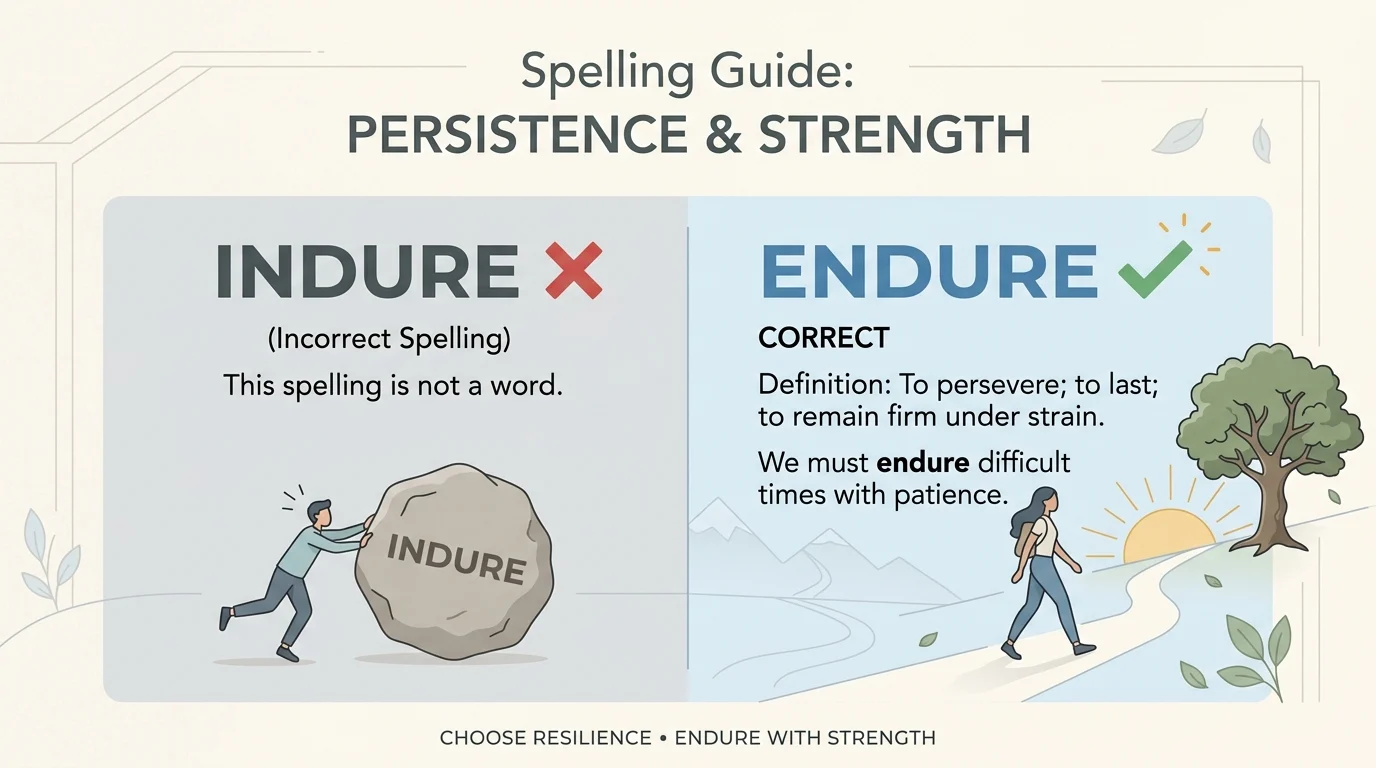
- ✅ Endure is the correct spelling
- ❌ Indure is incorrect and not a standard English word
Always use endure in both formal and informal writing.
What Does “Endure” Mean?
Endure is a verb that means to suffer through, tolerate, or remain strong during something difficult.
Common meanings:
- To go through hardship or pain
- To tolerate something unpleasant
- To last over time
Example sentences:
- She had to endure a lot of challenges to succeed.
- They endured the harsh winter conditions.
- True love can endure anything.
Why “Indure” Is Incorrect
The spelling “indure” is a mistake it is not recognized as a correct English word.
Why the confusion happens:
- It sounds similar to endure
- People mix up the prefixes “in-” and “en-”
- Fast typing or pronunciation habits lead to the error
However, in standard dictionaries and usage, only endure is correct.
Indure vs Endure: Key Differences
| Feature | Endure | Indure |
|---|---|---|
| Correct | ✔ Yes | ✖ No |
| Meaning | To suffer, tolerate, last | Not a valid word |
| Usage | Common and standard | Misspelling |
| Recommended | Always use | Avoid completely |
Common Mistakes to Avoid
1. Using “indure” in writing
- ❌ He had to indure many struggles
- ✔ He had to endure many struggles
2. Confusing prefixes
Not all words use “in-”some use “en-” based on their origin.
3. Relying on pronunciation
Even if it sounds similar, spelling must follow correct form.
Helpful Tip to Remember
Think of it like this:
👉 Endure = “EN” as in “END” → lasting until the end
This makes it easier to remember the correct spelling.
More Examples of “Endure” in Context
- The soldiers endured extreme conditions.
- This material is strong enough to endure pressure.
- She couldn’t endure the pain any longer.
- Their friendship has endured for years.
Synonyms and Related Words
To improve your writing, you can also use:
- Tolerate
- Withstand
- Bear
- Survive
- Persist
These help vary your language while keeping the meaning clear.
American vs British English
There’s no difference here:
- Endure is correct in both American and British English
- Indure is incorrect in both
FAQs About Indure vs Endure
1. Is “indure” ever correct?
No, indure is not a valid English word.
2. Why do people write “indure”?
Because it sounds similar to “endure” and due to confusion with prefixes.
3. What does “endure” mean?
It means to suffer through, tolerate, or last over time.
4. Can “endure” be used in formal writing?
Yes, it is commonly used in both formal and informal contexts.
5. What is the past tense of endure?
The past tense is endured.
6. Is “endurance” related to “endure”?
Yes, endurance is the noun form, meaning the ability to endure.
7. How can I remember the correct spelling?
Think: endure = lasting to the end.
Summary
When comparing indure vs endure, the correct spelling is always endure. It is a standard English verb meaning to tolerate, suffer through, or last over time. The version indure is simply a common misspelling and should be avoided in all writing.
Understanding small spelling differences like this can greatly improve your writing clarity and professionalism. Once you remember the correct form, you’ll use it confidently every time.
Actionable Takeaway
Next time you write the word, remember:
👉 Endure = correct (think “end”)
👉 Indure = incorrect
Stick with endure for clear, accurate writing.