Have you ever typed “panick” and wondered if it looks right? You’re not alone. This small spelling confusion is surprisingly common, especially because English can be tricky with similar-looking words.
The good news is that the rule here is simple. Once you understand it, you’ll never second-guess yourself again.
Quick Answer
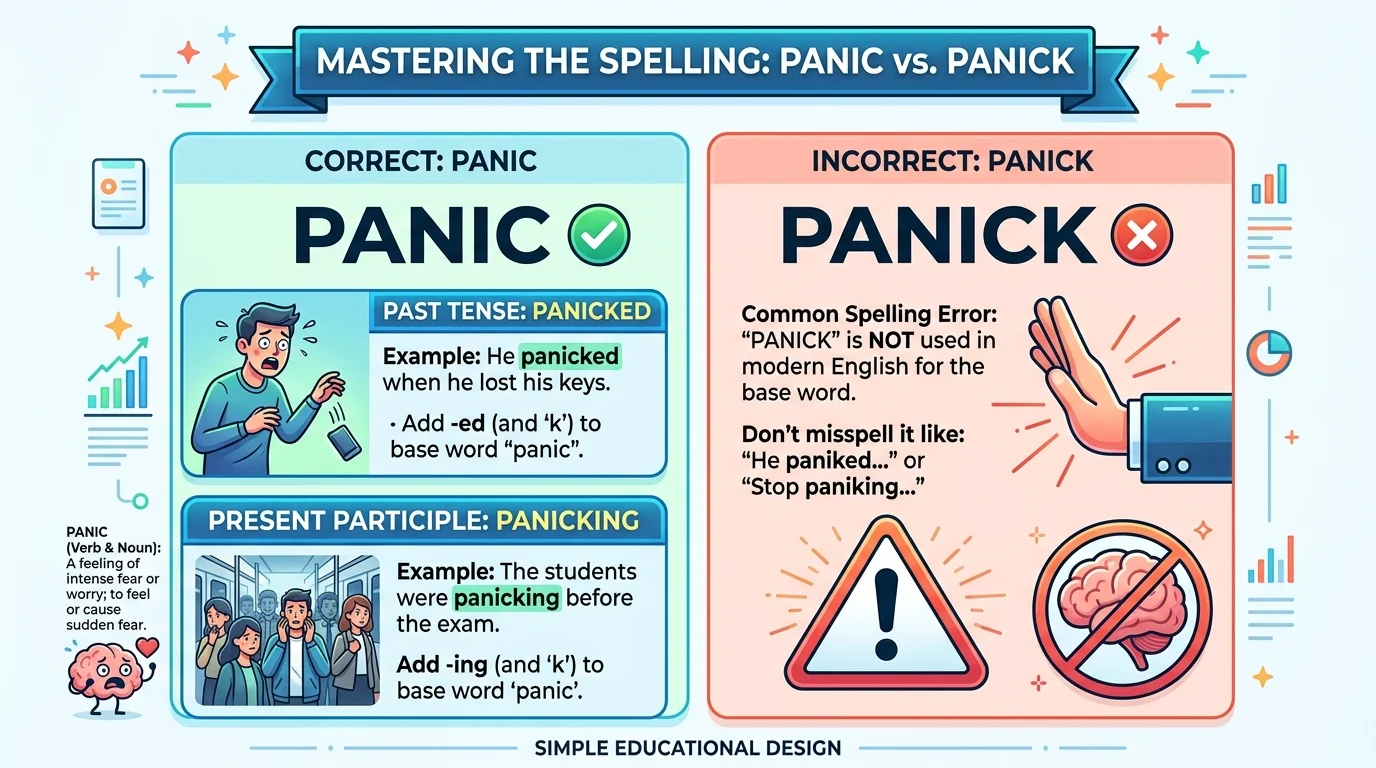
“Panic” is correct.
“Panick” is incorrect and not a real English word.
✔ Correct: Try not to panic in stressful situations.
❌ Incorrect: Try not to panick in stressful situations.
What Does “Panic” Mean
“Panic” is both a noun and a verb. It means a sudden feeling of fear, anxiety, or loss of control.
Examples of “Panic”
- Don’t panic, everything will be okay.
- She felt a wave of panic before the exam.
- People began to panic during the emergency.
- Stay calm and avoid panic.
Why “Panick” Is Wrong
“Panick” is a misspelling. The correct base word always ends with c, not “ck”.
The confusion usually happens because of how some English words add “k” in certain forms.
Important Rule You Should Know
When adding endings like -ed or -ing to words ending in “c”, we often add a “k” for correct spelling.
Examples
- Panic → Panicked ✔
- Panic → Panicking ✔
But the base word itself remains:
👉 Panic ✔
👉 Not Panick ❌
Panic vs Panick Comparison
| Feature | Panic | Panick |
|---|---|---|
| Correct spelling | ✔ Yes | ❌ No |
| Meaning | Fear or sudden anxiety | None |
| Usage | Standard English | Misspelling |
| Example | Don’t panic ✔ | Don’t panick ❌ |
Common Mistakes to Avoid
1. Adding unnecessary “k”
❌ I started to panick.
✔ I started to panic.
2. Confusing with past tense forms
Because we write panicked, people assume the base word is “panick” which is incorrect.
3. Typing quickly without checking
This mistake often happens in fast writing or casual messages.
Easy Trick to Remember
Think of it like this:
👉 The base word is always simple
👉 Panic ends with just “c”
Only add “k” when adding endings like -ed or -ing
American vs British English
There is no difference:
- “Panic” is correct in both American and British English
- “Panick” is incorrect everywhere
Related Keywords for Better Understanding
- Panic spelling
- Panicked vs paniced
- Panicking spelling rule
- Common English spelling mistakes
- Words ending in c rules
- English grammar tips
Practice Questions
Choose the correct word:
- Try not to ___ during the test.
✔ panic - She felt sudden ___.
✔ panic - They started to ___ when they heard the noise.
✔ panic
FAQs
1. Is “panick” ever correct
No, it is always a spelling mistake.
2. Why do we write “panicked” with a k
Because English adds “k” before endings like -ed or -ing for words ending in “c”.
3. What is the correct base word
The correct base word is panic.
4. Is this mistake common
Yes, many people confuse it due to past tense forms.
5. Can spellcheck fix this
Usually yes, but it’s still important to know the rule.
6. Does pronunciation affect spelling
Not always, English spelling rules are more important than sound.
Summary
The difference between panic vs panick is simple. “Panic” is the correct spelling, while “panick” is a common mistake. The confusion comes from forms like “panicked” and “panicking,” where an extra “k” is added.
Once you understand that the base word never changes, you can avoid this mistake easily and improve your writing clarity.
Actionable Takeaway
Next time you write the word, remember:
👉 Always use panic
👉 Never use panick
👉 Add “k” only in forms like panicked or panicking
A quick check can make your writing look more polished and professional.