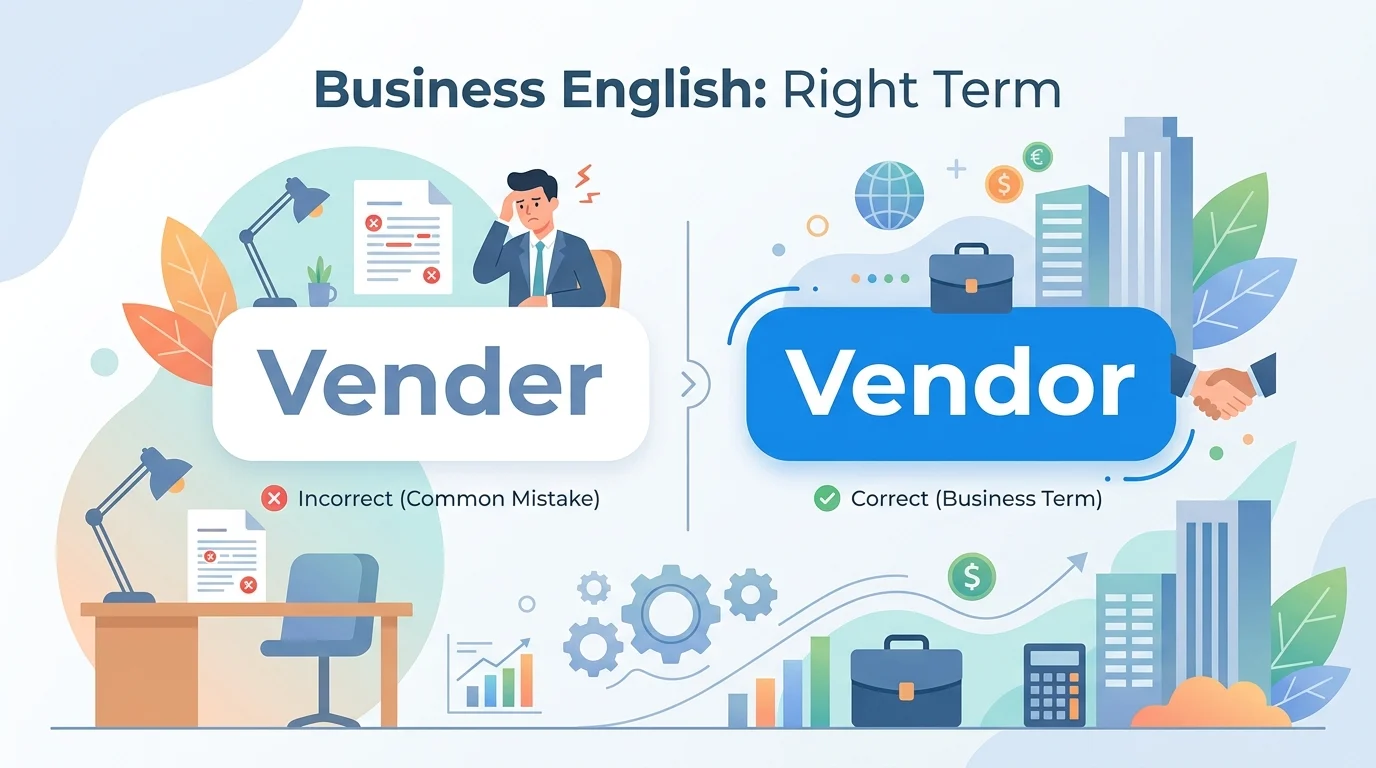
If you’ve ever typed “vender” instead of “vendor” and paused to wonder if it’s right, you’re not alone. These two words look almost identical, sound the same, and even share a similar origin but only one is commonly correct in modern usage. Understanding the difference between vender vs vendor can help you write more clearly, especially in business, eCommerce, and professional communication.
In this guide, we’ll break down the meaning, usage, examples, and common mistakes surrounding these terms. By the end, you’ll feel confident choosing the right word every time if you’re writing a blog, email, or product listing.
Quick Answer: Vender vs Vendor
- Vendor is the correct and widely accepted spelling in modern English.
- Vender is an outdated or less common variant, rarely used today.
- In almost all cases, you should use vendor, especially in business, technology, and everyday writing.
What Does “Vendor” Mean?
A vendor is a person or business that sells goods or services. This term is commonly used in commerce, retail, events, and digital marketplaces.
Examples of “Vendor” in Sentences:
- The company hired a new vendor to supply office equipment.
- Food vendors lined the street during the festival.
- We need to evaluate each software vendor before making a decision.
Related Terms (LSI Keywords):
- supplier
- seller
- merchant
- service provider
- contractor
“Vendor” is the standard term in both formal and informal contexts, making it the safest choice.
What Does “Vender” Mean?
“Vender” is technically a valid word, derived from the same Latin root as “vendor” (vendere, meaning “to sell”). However, it is rarely used in modern English and is often considered outdated or incorrect in most contexts.
Examples of “Vender” (Rare Usage):
- The old document referred to the seller as a vender.
- Some historical texts use “vender” instead of “vendor.”
In modern writing, using “vender” may confuse readers or appear as a spelling mistake.
Vender vs Vendor: Key Differences
Here’s a simple comparison to make things crystal clear:
| Feature | Vendor | Vender |
|---|---|---|
| Usage Frequency | Very common | Rare / outdated |
| Accepted Spelling | Yes (standard English) | Not widely accepted |
| Context | Business, commerce, everyday | Historical or uncommon usage |
| Recommendation | Always use | Avoid in modern writing |
Why “Vendor” Is Preferred Today
Language evolves over time, and certain spellings become standardized. “Vendor” has become the dominant spelling in:
- Business communication
- Legal documents
- eCommerce platforms
- Academic and professional writing
Search engines, grammar tools, and dictionaries all recognize vendor as the correct modern form. Using it improves clarity, professionalism, and SEO performance.
American vs British English: Is There a Difference?
Good news—there’s no difference between American and British English in this case.
- Vendor is the correct spelling in both American and British English.
- Vender is uncommon in both varieties and generally avoided.
So no matter where your audience is, “vendor” is the safe and correct choice.
Common Mistakes to Avoid
Even though the difference seems small, it’s easy to slip up. Here are some common mistakes and how to fix them:
1. Using “Vender” in Professional Writing
❌ Incorrect: The vender will deliver the goods tomorrow.
✅ Correct: The vendor will deliver the goods tomorrow.
2. Assuming Both Are Equally Acceptable
Many people think “vender” is just a regional variation—but it’s not commonly accepted today.
3. Mixing Spellings in One Document
Consistency matters. Always stick with vendor throughout your content.
4. Ignoring Spellcheck Warnings
Most tools flag “vender” as a misspelling. Don’t ignore it—correct it to “vendor.”
Real-Life Examples of “Vendor” Usage
To help you understand how natural “vendor” sounds, here are practical examples across different contexts:
Business
- Our company works with multiple vendors to manage supply chains.
Events
- Local vendors sold handmade crafts at the fair.
Technology
- The software vendor released a new update.
Real Estate
- The vendor agreed to the buyer’s offer.
Tips to Remember the Difference
If you often confuse vender vs vendor, try these simple tricks:
- Think of “vendor” as the “standard” word it’s the one everyone uses.
- Associate “vendor” with “value” or “valid” to remember it’s correct.
- If in doubt, check a dictionary “vendor” will always appear first.
FAQs About Vender vs Vendor
1. Is “vender” ever correct?
Yes, but it’s outdated and rarely used. In modern English, it’s best to avoid it.
2. Why do people still use “vender”?
Mostly due to confusion or habit. Some may not realize “vendor” is the preferred spelling.
3. Is “vendor” used worldwide?
Yes, “vendor” is accepted in both American and British English and used globally.
4. Does “vender” have a different meaning?
No, both words share the same meaning, but “vender” is just an older variant.
5. Which spelling should I use for SEO content?
Always use vendor. It’s the term people search for and expect.
6. Is “vendor” formal or informal?
It works in both formal and informal contexts, making it highly versatile.
7. Can using “vender” affect my credibility?
Yes, it may appear as a spelling mistake and reduce professionalism.
8. Are there industries where “vender” is preferred?
No major modern industries prefer “vender.” “Vendor” is standard everywhere.
Final Thoughts
When it comes to vender vs vendor, the choice is simple: vendor is correct, modern, and widely accepted, while “vender” is outdated and rarely used. Using the right spelling not only improves your writing but also builds trust with your readers, especially in professional or online settings.
Clear communication matters more than ever, and small details like spelling can make a big difference. By consistently choosing “vendor,” you ensure your content is polished, credible, and easy to understand.
Actionable Takeaway
- Always use vendor in writing, emails, and business documents.
- Avoid “vender” unless you’re referencing historical text.
- Double-check your spelling, especially in professional or SEO content.
By following these simple steps, you’ll never second-guess vender vs vendor again.