Have you ever read a verse about eunuchs and felt confused?
Maybe the word sounded strange. Maybe it stirred questions in your heart. Or maybe you saw it in a dream and wondered if it carried a divine message.
You are not alone.
The eunuchs meaning in the Bible is deeper than many think. It is not only about physical condition. It also reveals God’s mercy, inclusion, and power to transform lives.
Let’s walk through this gently, with truth and hope.
What Does Eunuchs Mean in the Bible?
In simple terms, a eunuch in the Bible was usually a man who had been physically castrated. Many served in royal courts. Some guarded queens. Others held high government positions.
But the biblical meaning goes beyond the physical.
In Scripture, eunuchs can represent:
- People set apart for special service
- Those who cannot have children
- Those who choose celibacy for God
- Outsiders welcomed into God’s family
The Bible speaks about eunuchs in both the Old and New Testaments. And each time, we see the heart of God.
Eunuchs in the Old Testament
In ancient times, eunuchs often served kings. For example, in the book of Esther, eunuchs worked in the palace of King Xerxes.
But under the Law of Moses, there were strict rules. In Deuteronomy 23:1, men with crushed or damaged private parts were not allowed in the assembly of the Lord.
That sounds harsh. It reflected the old covenant laws about physical wholeness in worship.
Yet God’s story does not end there.
God’s Promise of Inclusion
One of the most beautiful passages about eunuchs appears in Isaiah 56:3–5.
God says:
“Let not the eunuch say, ‘Behold, I am a dry tree.’”
Instead, God promises them:
- A place in His house
- A name better than sons and daughters
- An everlasting name
This is powerful.
In a culture where children meant honor and legacy, eunuchs were seen as “cut off.” Yet God says they are not forgotten. They are not useless. They are not dry trees.
This reveals the spiritual meaning: God restores what the world rejects.
Eunuchs in the New Testament
The New Testament deepens this truth.
In Matthew 19:12, Jesus speaks of three kinds of eunuchs:
- Those born that way
- Those made eunuchs by others
- Those who choose to live like eunuchs for the kingdom of heaven
Here, Jesus expands the meaning.
He speaks not only of physical condition but of voluntary devotion. Some give up marriage to serve God fully. This is about calling, not shame.
Jesus honors those who sacrifice for faith.
The Ethiopian Eunuch: A Story of Hope
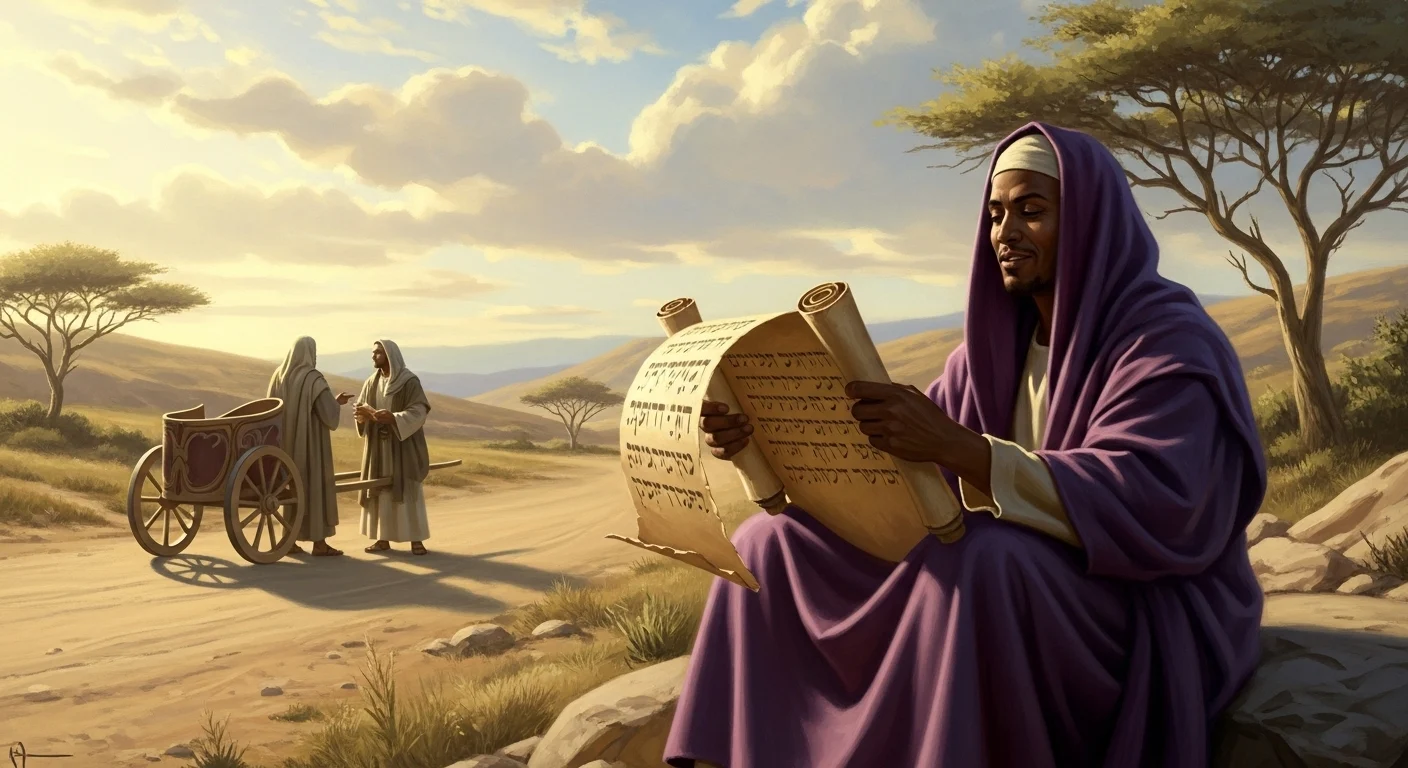
One of the most moving moments appears in Acts 8:26–39.
An Ethiopian eunuch was reading the prophet Isaiah. He was seeking truth. He was spiritually hungry.
God sent Philip to explain the gospel to him.
The eunuch believed in Jesus. He was baptized immediately.
This is important.
Under old laws, he may have been excluded. But through Christ, he was fully accepted.
No delay.
No rejection.
No barrier.
This shows the heart of the Gospel: in Christ, everyone can belong.
The Spiritual Meaning of Eunuchs
So what is the spiritual meaning today?
Eunuchs can symbolize:
1. Feeling Cut Off
Some people feel excluded from church, family, or society. Maybe because of past mistakes. Maybe because of circumstances beyond their control.
The eunuch represents the outsider.
But God says, “You have a place.”
2. Sacrifice for God
Some believers choose singleness for a season or for life. This reflects devotion and focus on God’s kingdom.
It is not lesser. It is holy.
3. Fruitfulness Beyond Biology
Eunuchs could not have children. Yet God promised them an everlasting name.
This teaches us:
Spiritual fruit is greater than physical fruit.
You may not build a big family.
But you can build faith in others.
You can lead souls to Christ.
You can leave a legacy of hope.
Eunuchs Meaning in the Bible and Dreams
If you dreamed about a eunuch, what could it mean?
Dream meaning depends on context. But biblically, it may reflect:
- Feeling powerless
- Fear of loss
- A call to purity
- A season of sacrifice
- A message of inclusion
Ask yourself:
- Do I feel rejected?
- Is God asking me to surrender something?
- Is He reshaping my identity?
Sometimes God uses symbols to show transformation. What seems like loss may be preparation for deeper faith.
Pray for guidance. The Holy Spirit brings clarity.
A Message for the Hurting Heart
Many people searching “eunuchs meaning in the Bible” carry hidden pain.
Maybe you feel:
- Inadequate
- Ashamed
- Different
- Forgotten
The presence of God speaks gently here.
Through Isaiah, He says you are not a dry tree.
Through Jesus, He says you are welcome in the kingdom.
Through the Ethiopian eunuch, He shows that salvation has no barrier.
This is a message of hope.
How This Applies to Your Faith Today
Here are simple faith insights you can hold onto:
God Values the Heart
Physical status never defines your worth. Faith does.
Your Story Is Not Over
What feels like loss may lead to transformation.
You Have a Place in God’s House
No background, limitation, or past mistake can block you from Christ.
Spiritual Legacy Matters Most
You can bear fruit through kindness, service, and love.
The eunuch’s story reminds us that God’s grace reaches the margins.
The Bigger Picture of Redemption
From Deuteronomy to Acts, we see a shift.
Law once limited access.
Grace opens the door wide.
This shows the beauty of the Gospel.
Jesus fulfills the law and restores those once excluded. This is not a small detail in Scripture. It is a picture of redemption.
It is about hope for everyone.
A Prayer for Guidance
If this topic touched your heart, you can pray:
“Lord, if I feel cut off, remind me I belong. If I fear loss, teach me trust. Help me find my place in Your kingdom. Transform my pain into purpose. Amen.”
God hears simple prayers.
Final Thoughts:
The eunuchs meaning in the Bible is not just about history.
It is about:
- Inclusion
- Faith
- Devotion
- Transformation
- Hope
God sees the person others overlook.
He gives everlasting identity.
He restores dignity.
If you came searching for answers, may you leave with peace. The same God who welcomed the Ethiopian eunuch welcomes you today.
You are not forgotten.
You are not disqualified.
You are invited into His grace.